Industrial Communication Protocol: Standards Guide
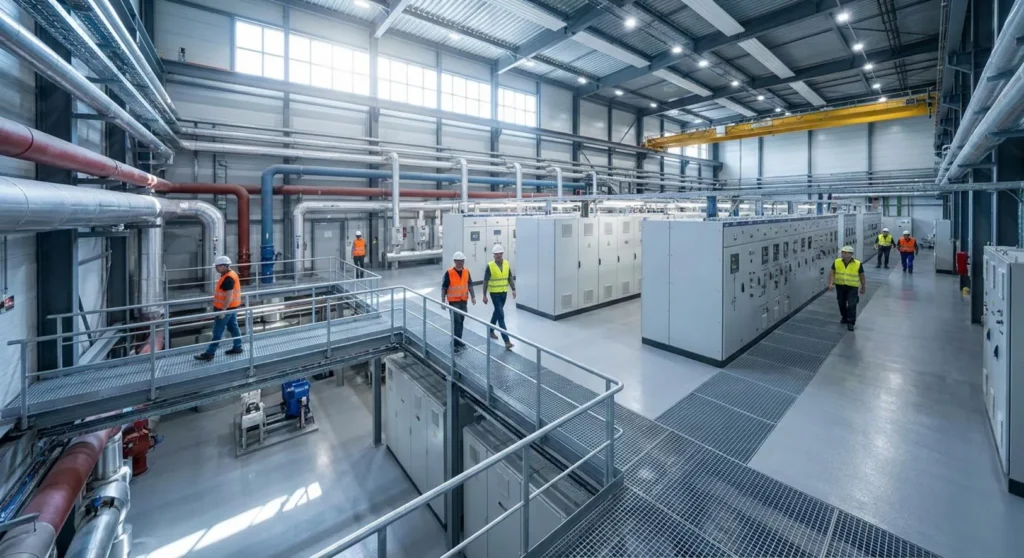
Industrial Communication Protocol: Analysis of Standards Used in Critical Telephony An industrial communication protocol is a set of standardized rules that define how equipment exchanges data in a production, security, or critical infrastructure environment. In industrial telephony, choosing the right protocol directly determines the reliability of emergency communications, equipment compatibility, and operator safety. This article examines the main protocols used in industrial environments, their technical differences, their specific use cases in critical telephony, common mistakes to avoid, and the decisive criteria for guiding a deployment. What is an industrial communication protocol? An industrial communication protocol is a technical specification that governs the format, sequence, and verification of data exchanged between programmable logic controllers, sensors, terminals, or supervisory systems. It is not simply wiring: it is the grammar that equipment uses to communicate with each other. In industrial telephony, this definition extends to wired telephone sets, IP intercoms, emergency call stations, and public address systems. Each piece of equipment embeds one or more protocols. Their compatibility determines whether the system will function without intermediate gateways, without excessive latency, and without signal loss under extreme conditions. The IEC 61784 standard, published by the International Electrotechnical Commission, lists the families of field protocols accepted in certified industrial environments. It constitutes the essential reference for any engineering firm or infrastructure manager working on classified sites. The Main Industrial Communication Protocols in Critical Telephony Four protocol families dominate telephony deployments in constrained industrial environments. Each addresses distinct needs in terms of latency, network topology, and security level. SIP: The Dominant Industrial Communication Protocol in IP Telephony The Session Initiation Protocol, or SIP, is today the de facto standard for voice communications over IP networks in industrial environments. Defined by the IETF in RFC 3261, it manages the establishment, modification, and termination of communication sessions. In industrial telephony, SIP presents several structural advantages. It is interoperable between manufacturers, which avoids proprietary dependencies. It supports server redundancy, essential on sites where communication failure is unacceptable. It integrates natively with modern IP-PBXs and unified supervision platforms. Its main limitation remains sensitivity to network disruptions. On a poorly segmented industrial network, SIP voice quality degrades rapidly. To guarantee optimal intelligibility even in noisy environments, certain terminals integrate advanced voice quality technologies such as HD Voice or ambient noise reduction. Poorly configured QoS leads to unexpected interruptions, particularly problematic on emergency call stations. Modbus and Profibus: Field Protocols for Supervised Integration Modbus and Profibus are not voice protocols. They manage exchanges between programmable logic controllers, sensors, and supervisory systems. Their role in industrial telephony is indirect but decisive: they enable automatic triggering of a voice alert or public address announcement in response to a field event. A gas detector that reports an alarm via Modbus TCP can thus automatically trigger an announcement across the entire industrial speaker network. This integration between field protocols and public address systems is at the heart of safety architectures on SEVESO sites or in ATEX zones. Industrial DECT: The Wireless Communication Protocol for Harsh Environments Digital Enhanced Cordless Telecommunications, in its industrial version, operates on the 1.9 GHz band. It offers immunity to electromagnetic interference far superior to Wi-Fi, making it the preferred choice in production halls, foundries, or refineries. Industrial DECT supports transparent roaming between base stations, without interruption during operator movement. It guarantees voice latency below 20 milliseconds, compatible with smooth emergency communication. Its range per cell varies from 50 to 300 meters depending on the environment, which requires rigorous preliminary coverage study. PoE and Power Protocols: An Often Overlooked Factor Power over Ethernet is not a communication protocol in the strict sense, but it determines the availability of industrial telephony equipment. A telephone set powered by PoE remains operational during a power outage if the network infrastructure has backup power. The IEEE 802.3at standard, known as PoE+, delivers up to 30 watts per port. It is sufficient to power an industrial terminal with a screen and integrated public address module. Neglecting this power layer is one of the most common mistakes in industrial telephony projects. Comparative Table of Industrial Communication Protocols Protocol Primary Use Latency Interoperability ATEX Suitable SIP (RFC 3261) Wired and wireless IP telephony Network-dependent (QoS critical) Very high Yes, depending on terminal Modbus TCP/RTU Supervision, alarm triggering Low (real-time possible) High Yes (via gateway) Profibus DP Automation, PLC integration Very low Medium (proprietary) Yes (certain equipment) Industrial DECT Wireless telephony in mobility Below 20 ms Medium to high Yes (certified terminals) PoE / PoE+ (IEEE 802.3at) IP terminal power supply Not applicable Universal Yes (depending on network cabinet) ONVIF (voice/video) IP intercom with video Variable depending on stream High between cameras/intercoms Limited Deployment Workflow for an Industrial Communication Protocol on a Critical Site Deploying a communication protocol on a constrained industrial site cannot be improvised. Here is the structured workflow that secures each stage, from initial audit to operational validation. Step 1 — Audit of Existing Infrastructure Inventory of equipment in place and their embedded protocols Identification of ATEX zones, required IP ratings, and electromagnetic constraints Mapping of critical communication points → definition of call priorities Step 2 — Selection of the Appropriate Industrial Communication Protocol Choice between wired SIP, industrial DECT, or hybrid combination based on operator mobility Verification of compatibility with the IP-PBX or central communication server Consideration of Modbus/Profibus integration if automatic triggers are planned Step 3 — Network Sizing and QoS Dedicated VLAN segmentation for voice to isolate critical traffic Configuration of QoS priority rules → voice streams take precedence over office data Validation of available bandwidth under maximum load conditions Step 4 — Installation and Integration of Certified Terminals Installation of ATEX or industrial IP telephone sets according to the defined mapping SIP configuration of each terminal and registration test on the central server Integration of emergency call stations into the numbering plan and alarm groups Step 5 — Load Testing and Operational Validation Simulation of simultaneous calls to test SIP server saturation Failover test to backup server in case of primary failure
Waterproof phone: complete guide for hazardous environments
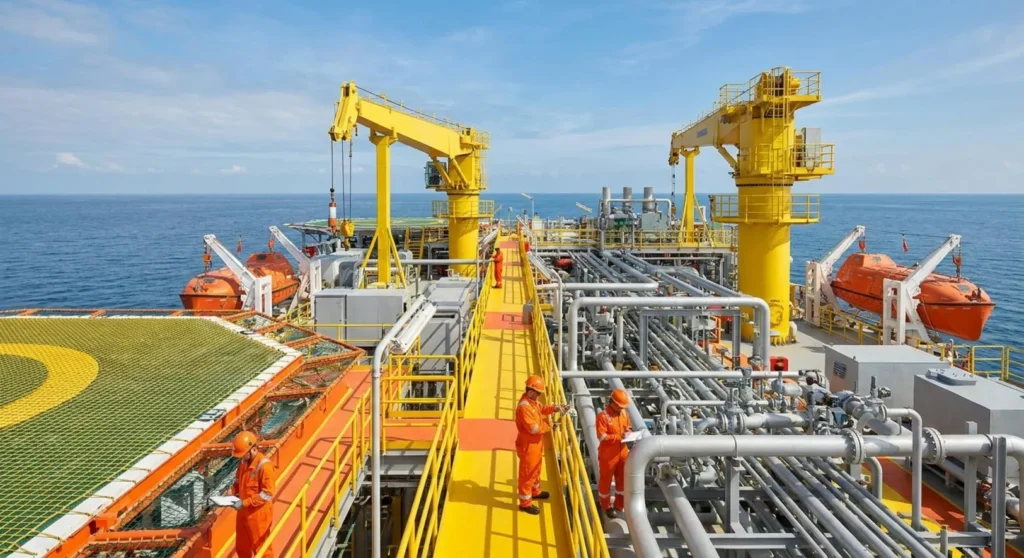
Waterproof phone: complete guide for emergency environments A waterproof phone is a communication device designed to resist the penetration of water, dust, and aggressive external agents. In emergency environments, this resistance is not a comfort feature—it is a vital requirement. Whether on an offshore platform, in a tunnel under construction, or at a chemical facility, the failure of a communication terminal can have irreversible consequences. This article explores the certifications that truly define waterproofing, the environments where these phones are essential, the most common selection errors, and the technical criteria to master before any deployment. What is a waterproof phone and how is waterproofing measured? A waterproof phone is defined by its IP (Ingress Protection) rating, an international standard that quantifies a device’s resistance to solids and liquids. This is not a qualitative notion—it is a standardized and verifiable measurement. The IP rating consists of two digits. The first indicates protection against solids (dust, particles). The second measures resistance to water, from simple splashing to prolonged immersion. A phone rated IP67 withstands immersion at 1 meter for 30 minutes. An IP68 guarantees immersion at greater depth according to conditions defined by the manufacturer. Decoding the most common IP ratings for emergency phones In the industrial and security sector, the most frequently encountered ratings are IP65, IP66, IP67, and IP68. Each corresponds to distinct exposure scenarios. IP Rating Dust Protection Water Protection Typical Environment IP65 Complete Low-pressure water jets Food processing industry, sheltered outdoor IP66 Complete High-pressure water jets Quarries, tunnels, industrial washing IP67 Complete Temporary immersion (1m / 30min) Ports, docks, flood zones IP68 Complete Prolonged immersion (manufacturer conditions) Offshore, underwater sites, great depths IP69K Complete High-pressure jets at high temperature Food industry, steam cleaning The IP rating alone is not sufficient to characterize a waterproof phone for hazardous environments. Other certifications, notably ATEX for explosive atmospheres, complement the required level of protection. Emergency environments that require a waterproof phone In emergency situations, the physical environment degrades equipment far faster than in normal use. A waterproof phone is not a technical luxury: it is the minimum condition to guarantee operational communication under stress. Oil sites and offshore platforms On an offshore platform, seawater is omnipresent: constant spray, splashing during operations, intense condensation in confined spaces. A phone rated IP66 minimum is essential. Salt corrosion attacks connectors and seals within weeks if the equipment is not dimensioned for this environment. Added to this is the presence of potentially explosive atmospheres. Waterproof phones deployed on these sites must combine IP certification and ATEX certification (or IECEx internationally). These two requirements are inseparable and not substitutable for one another. Tunnels, mines, and quarries In underground structures, mineral dust, constant humidity, and water splashing during drilling create a particularly hostile environment. Phones used in road or rail tunnels must withstand high-pressure jets during cleaning operations, hence the relevance of IP66 or IP67 ratings. A2S Voice offers tunnel communication solutions adapted to these specific constraints. In mines, the presence of firedamp requires dual certification. The waterproof phone must be ATEX certified for zone 1 or zone 2, depending on the probability of an explosive atmosphere. Applicable standards fall under European directive ATEX 2014/34/EU. Food processing and pharmaceutical facilities These sectors combine two major constraints: frequent cleaning with hot water or steam, and strict hygiene requirements. An IP69K waterproof phone is sometimes the only acceptable option in a slaughterhouse or pharmaceutical cleanroom. IP certification alone guarantees waterproofing, but resistance to chemical disinfectants must be verified separately in technical data sheets. Port areas and loading docks Ports combine marine exposure, mechanical vibrations from cranes and forklifts, and risks of accidental immersion. An IP67 waterproof phone generally corresponds to the minimum requirements for these environments. Fixed emergency stations installed on docks must also resist vandalism and impacts, which points toward robust metal enclosures in addition to IP protection. Two common errors when choosing a waterproof phone Choosing a waterproof phone for an industrial or emergency site is rarely trivial, and two errors systematically recur in the field. Confusing IP and chemical resistance The IP rating protects against water and dust. It says nothing about resistance to acids, solvents, or aggressive cleaning products. A phone rated IP68 can deteriorate within weeks if its plastic housing is not formulated to resist the chemical agents present on site. This error is common in chemical and pharmaceutical industries where operators select equipment based solely on IP rating without consulting safety data sheets for the products used. Underestimating the required ATEX level The second error consists of deploying a non-ATEX certified waterproof phone in a classified zone, or using a zone 2 ATEX certification in a zone 1 area. This confusion creates major risk situations and exposes the operator to criminal liability in case of incident. ATEX zone classification must be performed by a qualified expert before any equipment selection. The mere fact that a device is robust or waterproof does not confer any capability in explosive atmospheres. ATEX waterproof phone: the superior level for hazardous sites An ATEX-certified waterproof phone combines two sets of properties that address distinct but often coexisting hazards. Waterproofing protects the device and user against physical agents; ATEX certification guarantees that the device cannot cause ignition in an explosive atmosphere. European directive ATEX 2014/34/EU classifies hazardous zones according to the frequency and duration of presence of an explosive atmosphere. Zones 0, 1, and 2 concern flammable gases and vapors. Zones 20, 21, and 22 cover combustible dusts. Each zone requires a specific level of protection, designated by the ATEX equipment category (1G, 2G, 3G for gases, 1D, 2D, 3D for dusts). Selection flowchart for a waterproof phone for ATEX sites Step 1 – Zone classification Identify the presence of flammable gases, vapors, or dusts Determine the frequency of explosive atmosphere occurrence Classify the zone: 0/1/2 (gas) or 20/21/22 (dust) Step 2 – Definition of required equipment category Zone 0 or 20 → category 1 (very high protection) Zone 1 or 21 → category 2 minimum Zone 2
Analog, IP, or GSM: Which technology for your intercom system in critical environments?

Analog, IP, or GSM: Which technology for your intercom system in critical environments? In the high-performance security sector, intercom systems are not limited to a simple door entry function. They are the first link in a global security chain, essential for qualifying a threat or coordinating an emergency intervention. On an industrial site, sensitive infrastructure, or logistics zone, system availability is an absolute requirement. Yet, when designing an installation, three architectures compete: analog, IP, and GSM. While each has its own characteristics, they meet distinct operational needs. This guide breaks down these solutions from the perspective of service continuity and hardware robustness. Analog Intercoms: Sustainability through physical connection Analog relies on continuous electrical signal transmission via dedicated copper cabling. Although considered traditional, this technology remains a benchmark for sites requiring total digital isolation. Technical expertise: Unlike connected systems, analog intercoms are disconnected from the IT network. This provides native immunity to cyberattacks. Why choose it for harsh environments? Its strength lies in its simplicity. It suffers from neither latency nor software instability. It is the solution of choice for environments subject to heavy constraints where resilience must be purely mechanical and electrical. Operational limit: Its lack of scalability. Integration with modern supervision tools or centralized multi-site management proves complex. IP Intercoms (SIP): Digital convergence at the service of operations Here, the intercom is a full-fledged IT terminal. Voice and images are digitized and routed via the company’s local area network (LAN). Technical expertise: Thanks to the SIP protocol (the international standard for IP telephony), interoperability is maximized. An IP intercom can trigger a recording on your video management software (VMS), interact with access control, or be managed from a remote supervision center. Audio performance: In noisy environments, IP allows for advanced digital processing for echo cancellation and ambient noise reduction, ensuring perfect speech intelligibility. Point of caution: The system depends on the network infrastructure. It therefore requires protection against power outages (UPS) and strict network segmentation (VLAN) to guarantee the priority of security flows. GSM Intercoms (4G/5G): Wireless communication over long distances This technology uses mobile operator networks to transmit calls. It is completely free from civil engineering constraints. Technical expertise: Deployment is extremely fast since it requires no wired connection between the guard station and the intercom. A simple power supply is sufficient. Mobility and responsiveness: When triggered, the call is routed directly to the terminals of patrolling agents. It is the ideal solution for large or geographically isolated sites (quarries, photovoltaic parks, peripheral warehouses). Point of caution: Quality of service depends on the operator’s network coverage. On certain confined sites, the installation of a remote antenna is essential to guarantee a stable connection. Comparative Summary: Decision support for sensitive sites Performance criteria Analog IP (Digital) GSM (Cellular) Cyber-protection Maximum (Isolation) High (Encryption) Dependent on mobile network Signal quality Standard High Definition Excellent Ease of installation Medium (Heavy cabling) Standard (RJ45 cabling) Very high (Wireless) Remote diagnostics Impossible Real-time (Supervision) Real-time The expert’s verdict: How to choose? The choice of technology should be dictated by your risk prevention plan: For critical infrastructure (Seveso sites, ATEX zones) where IT security is the top priority, analog remains a very effective fallback security solution. For a modern industrial site looking to centralize its data and video flows, IP offers unmatched flexibility and analytical power. For peripheral or isolated access, GSM is the most economically and operationally rational answer. Regulatory reminder: Regardless of the chosen architecture, equipment robustness is non-negotiable. In harsh environments, prioritize terminals certified IP66 (water and dust tightness) and IK10 (mechanical resistance to impact and vandalism). Share article Articles that might interest you Protocole de communication industriel : guide des standards Protocole de communication industriel : analyse des standards utilisés en… Read More A2S Atex20 juillet 2026 Téléphone étanche : guide complet environnements dangereux Téléphone étanche : guide complet pour les environnements d’urgence Un… Read More A2S Atex14 juillet 2026 Analogique, IP ou GSM : Quelle technologie pour votre interphonie en environnement critique ? Analogique, IP ou GSM : Quelle technologie pour votre interphonie… Read More A2S Atex12 février 2026 Everything You Need to Know About Emergency Call Stations Everything You Need to Know About Emergency Call Stations Une… Read More A2S Atex9 janvier 2026 Load More
Everything You Need to Know About Emergency Call Stations
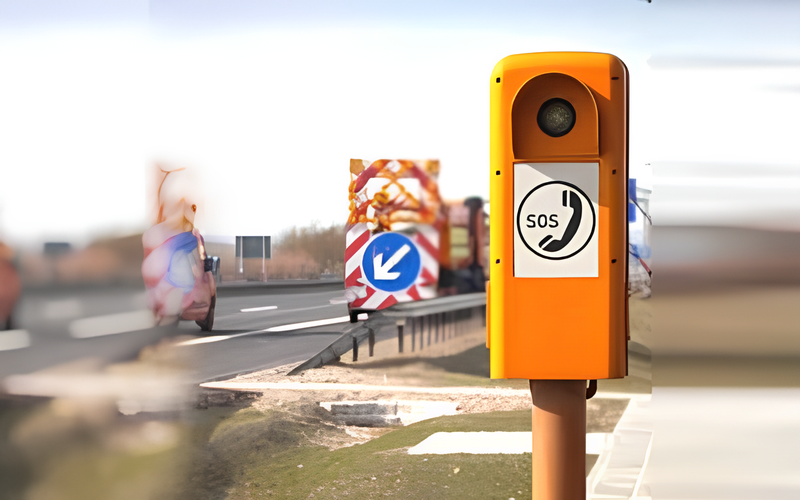
Everything You Need to Know About Emergency Call Stations An emergency call station is a telephone post that allows for quick contact with emergency services in an urgent situation. This device is generally visible along highways and expressways, but also on beaches for some time now. When should you use an emergency call station? What are the characteristics of this device? What is an emergency call station? If you are used to driving on highways, you have surely noticed small orange telephone booths along the roads. These are none other than emergency call stations, also known as SOS terminals or emergency posts. As their name suggests, these devices allow emergency calls to be made. In France, emergency call stations are found every two kilometers along the emergency lanes. Emergency call stations are recognizable by their orange, yellow, or red color. The inscription “urgences” or “SOS” may also be visible on the booth. One of the particularities of this device is that it is geolocated. Regardless of where you make the call from the station, your interlocutor will be able to find your location. Another particularity is that the user does not have to dial a number to make an emergency call. They simply press a button and will be directly connected to an emergency call management center. The online operator will be responsible for contacting the services appropriate to the situation. This may include doctors, ambulances, firefighters, or breakdown services. The advantage of the emergency call station is that you can contact emergency services at any time, wherever you are. Whether you have lost your smartphone or its battery is dead, you will have no trouble getting assistance or rescue. Moreover, thanks to geolocation, you will not have to indicate your position. An emergency call station is powered by photovoltaic panels, and the connection is provided by the GSM network or fiber optics. Except in the event of a breakdown or device failure, you will be assured of immediate assistance. If no agent can receive your call, you have the option to leave a message. Your request will then be processed within a maximum of 25 minutes. Emergency Call Station: How and when to use it? Emergency call stations are devices designed to help people in emergency situations. While we primarily see them on highways, they are also available in train stations, industrial buildings, and even on beaches. You can use an emergency call station in various situations: in case of vehicle breakdown; in case of a road accident (whether you are a victim or a witness); in case of a passenger feeling unwell; in case of an incident on the beach (drowning, sting, injury…); in case of distress (theft, attack, assault…). In short, whenever you need assistance from emergency services, you can use an emergency call station. Whether you have a phone or not, you can use the device. It is even more recommended to use the SOS station rather than a personal phone in an emergency situation because it is geolocated. It will be easier for emergency services to find the location of the event. With the device located every two kilometers, you will have no difficulty finding one on your way. ISIS Waterproof Emergency Phone In short, whenever you need assistance from emergency services, you can use an emergency call station. Whether you have a phone or not, you can use the device. It is even more recommended to use the SOS station rather than a personal phone in an emergency situation because it is geolocated. It will be easier for emergency services to find the location of the event. With the device located every two kilometers, you will have no difficulty finding one on your way. OneUP Totem Emergency Call Station To use an emergency call station, simply pick up the handset and press a button. On some devices, there is a speaker function, facilitating the call in cases where you are unable to hold the handset. Depending on the model, the device may have an indicator light that shows the call status. If it is off, you can press the call button. While waiting for the operator’s response, the light will flash. Once the light is steady, you can speak and report the emergency situation. For better assistance, you should provide as many details as possible about the event for which you are requesting assistance. Only hang up when the agent on the line asks you to. A project? Contact us! Share Articles Articles that might interest you Protocole de communication industriel : guide des standards Protocole de communication industriel : analyse des standards utilisés en… Read More A2S Atex20 juillet 2026 Téléphone étanche : guide complet environnements dangereux Téléphone étanche : guide complet pour les environnements d’urgence Un… Read More A2S Atex14 juillet 2026 Analogique, IP ou GSM : Quelle technologie pour votre interphonie en environnement critique ? Analogique, IP ou GSM : Quelle technologie pour votre interphonie… Read More A2S Atex12 février 2026 Everything You Need to Know About Emergency Call Stations Everything You Need to Know About Emergency Call Stations Une… Read More A2S Atex9 janvier 2026 Load More Categories Travel Tips Travel Planning Destinations
Intercom Systems in Noisy Environments: How to Ensure Clear Communication

Intercom Systems in Noisy Environments: How to Ensure Clear Communication In industrial environments where noise levels can compromise verbal communication, it is crucial to implement suitable intercom systems. These environments, characterized by constant or intermittent noise often exceeding 85 dB, require specific solutions to maintain effective communication, essential for both safety and operational efficiency. Understanding the Challenges of Noisy Environments High Noise Levels Machine noise, construction operations, and other industrial sources create background sound that can mask essential communications, making standard conversations nearly impossible and potentially dangerous. Interference and Reverberation Large metal surfaces, complex structures, and open spaces can cause echoes and reverberations that further degrade the sound quality of communications. Intercom Technologies and Solutions for Noisy Environments Noise-Canceling Intercom Systems These systems use advanced technologies to actively filter ambient noise and improve voice clarity. They are essential for reducing sound interference and ensuring that voice messages are clear and understandable. High-Definition Audio Intercoms Improving audio bandwidth enables the transmission of clearer and more distinct sounds, making it easier to distinguish speech even in a noisy environment. Use of Headsets and Hands-Free Devices Headsets designed for noisy environments incorporate noise reduction technologies that isolate the user from ambient noise, enabling clear listening without increasing overall volume, which could be harmful. Audible and Visual Alarms In areas where ambient noise is extremely high, audible alarms are not always sufficient. Integrating visual alarms, such as strobes or flashing lights, can effectively signal the receipt of a call or alert. These visual indicators are essential for attracting attention when the sound environment is saturated. Soundproof Booths Installing soundproof booths around intercom stations is another effective strategy. These booths are designed to absorb external noise, providing a relatively quiet space for communication. They are particularly useful in extremely noisy areas where even the most advanced intercom systems may be ineffective. Implementation and Best Practices Strategic Intercom Installation Placing intercoms in areas where noise is less intense or using soundproof booths can help minimize the effects of ambient noise. Training and Communication Protocols Educating employees on the correct use of intercom systems and effective communication practices, such as using simple codes and receipt confirmations, is vital to avoid costly errors. Regular Maintenance Proactive maintenance is necessary to ensure that all intercom systems operate at optimal capacity and continue to provide reliable performance over time. Conclusion Ensuring clear communication in noisy industrial environments is a technical and operational challenge. By integrating advanced intercom systems, using appropriate visual and audible alarms, and implementing soundproof booths, companies can effectively overcome these obstacles. These strategies, combined with adequate training and regular maintenance, ensure that communications remain effective and secure, thereby supporting productivity and safety in the workplace. Share Articles Articles That May Interest You Protocole de communication industriel : guide des standards Protocole de communication industriel : analyse des standards utilisés en… Read More A2S Atex20 juillet 2026 Téléphone étanche : guide complet environnements dangereux Téléphone étanche : guide complet pour les environnements d’urgence Un… Read More A2S Atex14 juillet 2026 Analogique, IP ou GSM : Quelle technologie pour votre interphonie en environnement critique ? Analogique, IP ou GSM : Quelle technologie pour votre interphonie… Read More A2S Atex12 février 2026 Everything You Need to Know About Emergency Call Stations Everything You Need to Know About Emergency Call Stations Une… Read More A2S Atex9 janvier 2026 Load More Categories Travel Tips Travel Planning Destinations
A2S supplies Swisspro with industrial VoIP phones
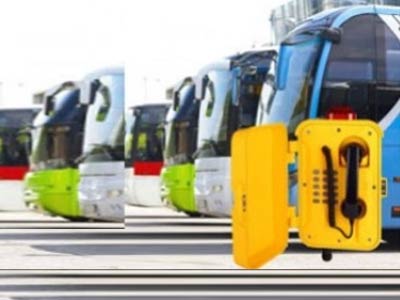
Swisspro**, a Swiss service provider—from consulting to operations—in the fields of information technology and electrical installation, called on A2S to supply 32 watertight ATHOS Series VoIP telephone handsets and associated services. These handsets are intended to equip a closed corporate network used by a public transport company for its buildings housing depots and maintenance areas for tram and bus fleets.Beyond price and robustness, Swisspro paid particular attention to the adaptability of the handsets supplied by A2S. In this case, the VoIP phone boards had to support QoS mode and the LLDP-MED protocol for distributing VLANs to the phones. In the customer’s context, this protocol enables: automatic VLAN assignment;• negotiation of power consumption with values more precise than PoE (Power over Ethernet) class information;• the ability to send terminal inventory information to the adjacent LAN switch.In addition, the phones had to be powered via PoE+ in accordance with the IEEE 802.3 standard. For the record, this feature makes it possible to connect equipment where power outlets are not accessible. Thus, PoE ports detect and supply electrical power to any PoE-powered equipment compliant with their standard. This makes it possible to install an access point, an IP camera and, in this case, an Internet phone.Through this contract, A2S adds a new name recognised in Switzerland to its client portfolio and also enters a new business sector for the company, namely communication technologies.*A2S designs, manufactures and distributes products and systems for hazardous areas in industrial environments: signalling, communication, detection and safety devices, electrical boxes and cabinets, control components, lighting, motors, heating and air conditioning, ventilation… This comprehensive positioning enables A2S to offer its services at every stage of an installation safety project: audit, study and engineering, development, inspection, logistics, commissioning and maintenance.
Post-Lockdown: A Contactless Phone Launched by A2S
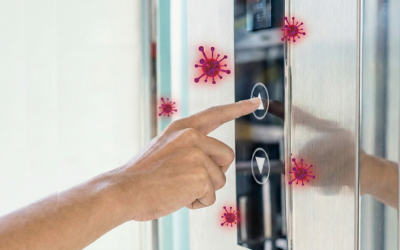
A Contactless Phone Launched by A2S As the COVID-19 health crisis has profoundly disrupted our lifestyles and work practices, the question of hygiene in public spaces has become central. With a virus capable of surviving several days on surfaces, shared equipment such as landline phones represents a significant transmission risk. To address this unprecedented challenge and prepare for a safe post-lockdown period, technological innovation is essential. Discover how A2S is reinventing emergency communication with the TM 450, a phone designed to be used without any physical contact. A Contactless Phone to Limit Virus Spread in Public Facilities and Businesses The current COVID-19 pandemic is unprecedented in its scale and the disruptions it entails. Economically, all organizations (public and private) are affected, across all sectors of activity. The WHO warned on April 22 that “this virus will be with us for a long time” (source). Concretely, with the approaching post-lockdown period and the need to restart the country, this means that new health measures will need to be implemented to prevent virus spread. Protecting employees and citizens is more than ever a priority! Industrial facilities and public facilities will therefore need to adapt very quickly. To address this emergency situation, A2S, the expert in technological innovation and worker protection, offers solutions based on contactless technology. Its new “hands-free” phone, the TM 450, has been specifically designed to limit infection risks caused by contact in public spaces. It is available in analog or digital (VoIP) versions. A Simple and Fast Call, Without Contact, for Emergency Communications A recent study conducted in Hong Kong shows that COVID-19 can survive up to 7 days on plastic or stainless steel surfaces (source). A situation that poses significant problems in industry and in all public facilities (public transport stations, airports, hospitals, elevators, etc.). Indeed, how can users and employees make emergency communications safely? As soon as there is physical contact with a button or call key, there is a risk of virus transmission. Hence the value of the TM 450, a “100% safe” landline phone because it is contactless. Flush-mounted or surface-mounted, it is equipped with an optoelectronic cell (infrared sensor) that triggers or takes a call upon detection of the user’s hand. These phones are available in two technologies: analog and digital (VoIP). NEW: CONTACTLESS PHONE Advantages: Analog or SIP technology Stainless steel housing IP65 protection Flush-mounted or surface-mounted version A New Barrier Gesture Unprecedented in the French Market Contactless technology is completely new to the French market. Yet it offers numerous advantages when it comes to making emergency communications: it is a simple and sustainable solution to avoid any risk of contamination; reliable, it is also high-performing because it is full-duplex: the contactless phone can send and receive calls; it is easily understandable by everyone: simply wave your hand in front of the unit to activate the phone; it adapts to all environments, even the most challenging (the phone offers IP65 waterproof protection); it can store multiple phone numbers: 4 with the IP version, up to 20 with the analog version; it is provided “turnkey”: the phones are fully programmed, simply plug them in to make them work; it is customizable through a comprehensive range of options (telephone station equipment, signaling equipment, and accessories). Unmatched Durability Very easy to use, the contactless phone is an immediately operational solution. It is also specifically designed to offer excellent long-term durability. Multiple Phone Ranges Coming Soon In response to demand, A2S is already planning to develop several ranges of contactless full-duplex hands-free phones to equip: all public facilities (train stations, airports, hotels & restaurants, shopping centers, government offices, museums, hospitals, etc.) cleanrooms (healthcare facilities, food processing industry, pharmaceutical industry, etc.). Our contactless phones offer increased resistance to harsh environments and intensive use. They benefit from a dual reliability guarantee: IP65 waterproof protection + a robust and corrosion-resistant stainless steel housing. Share Articles Articles That May Interest You Protocole de communication industriel : guide des standards Protocole de communication industriel : analyse des standards utilisés en… Read More A2S Atex20 juillet 2026 Téléphone étanche : guide complet environnements dangereux Téléphone étanche : guide complet pour les environnements d’urgence Un… Read More A2S Atex14 juillet 2026 Analogique, IP ou GSM : Quelle technologie pour votre interphonie en environnement critique ? Analogique, IP ou GSM : Quelle technologie pour votre interphonie… Read More A2S Atex12 février 2026 Everything You Need to Know About Emergency Call Stations Everything You Need to Know About Emergency Call Stations Une… Read More A2S Atex9 janvier 2026 Load More Categories A2S News Tips
A2S emergency phones equip the beaches of Les Landes

Stretching 106 km, the Landes coastline is a paradise for beach lovers. Swimming, surfing, napping, horseback riding… various activities can be enjoyed there. With all these possibilities come their share of dangers (drowning, stings, slips…). Ensuring the safety of vacationers has become a priority for authorities. What measures should be implemented to prevent potential accidents on the Landes beaches? How to strengthen vacationer safety? Les Landes and its tourist appeal Over 100 km of beaches, around fifteen seaside resorts, an immense pine forest, endless sand dunes… Les Landes is a vacation destination par excellence. The department offers its visitors a paradisiacal setting and a multitude of activities, on land and at sea. In addition to luxuriant and preserved nature, the department provides refined local produce and rich cultural heritage.In the Landes department, tourists are both French and foreign. The visitor rate continues to increase, both in early and late season. During the summer period, tourist accommodations record up to 90% occupancy. In both July and August, reservation rates can reach 95%. In 2021, visitor numbers in the department were estimated at 23.1 million overnight stays.The Landes department owes its appeal largely to its fine sandy beaches. It has approximately 59 beaches, delighting enthusiasts of relaxation and water activities. The Landes coastline (or Silver Coast) is particularly known for the quality of its waves. Hossegor is among the favorite destinations of local and international surfers. While the Landes coastline is a prime destination for vacationers, it can also be dangerous terrain for them. The Landes beaches are renowned for being magnificent and impressive. But they are also known for baïnes, small pools forming in the sand, responsible for numerous drownings on the beaches. In France, drowning is one of the main accidents occurring on beaches. In 2021, Public Health France recorded nearly 1,500 during the period from June 1 to September 30, of which 400 were fatal. A figure down 10% compared to previous years, but still significant. In Nouvelle-Aquitaine, also in 2021, 22 drownings occurred, including 8 fatal, between June 1 and July 5.Besides drownings, other accidents can occur on beaches. These include stings of all kinds, particularly from jellyfish or Portuguese man-of-war. The latter have already led to the closure of several beaches in Les Landes and Gironde. In 10% of cases, their stings can be serious. Vigilance is therefore essential because underwater as well as on the surface, danger is present. Other dangers such as assaults, thefts, or abductions can also occur on beaches. These incidents happen especially during the summer period, when vacationers are abundant. The challenge for coastal safety Les Landes is a highly popular destination for vacationers, in all seasons. The Landes beaches are particularly crowded in summer: they are an excellent playground for sea lovers. But where there is sea, there is often danger, especially when visitor numbers are high. Many elements can thus disturb the peace of vacationers on the beaches.To ensure coastal safety, the relevant authorities have deployed an arsenal of measures. Buoys, flags, warning signs, and lifeguard supervisors are mobilized to ensure beach security. The challenge is knowing how to manage these incidents outside surveillance periods. Some beaches are indeed not supervised and many times, accidents occur when an area is unsupervised. In these cases, lifeguards are not on site.To ensure rapid emergency response in case of accident, several municipalities in Les Landes called upon A2S. They were looking for a system allowing contact with rescuers at any time, particularly outside surveillance periods. The goal being to provide assistance to victims as soon as an accident occurs. Our approach to securing beaches – the Su emergency call station On beaches, an accident can occur at any moment, in the water or on the surface. If lifeguards are not present at the time of the incident, victims or witnesses must take action to report them. However, we know that mobile phones are not always at hand when at the beach. It can also happen that people do not know who to contact in case of accident. Sometimes, network latency can disrupt communication. To meet our clients’ needs, we selected a product: a waterproof ISIS emergency call station. This allows direct contact with emergency services in case of accident by pressing a simple button. The system has been adopted on six beaches on the South Coast of Les Landes, including those of Nord and Vieux Boucau. The stations were installed at the top of the beach and are recognizable by their yellow color. Our emergency phone and call station solutions A2S offers a wide range of emergency phones and call stations. The ISIS-ml GSM/VoIP waterproof emergency call station seemed to us to be the best solution. It consists of a robust SMC housing made of thick steel, ideal for harsh environments. It is thus protected against any act of vandalism, impacts, and even bad weather. This type of emergency call station is most often used on highways or in industrial areas.The ISIS call station is designed for environments requiring a solid and waterproof GSM phone. It allows calls to be made at any time, from a button. In our client’s case, the SOS station is connected to 15, the SAMU. The speed dial number is programmable, on-site or remotely, according to needs. Finally, ISIS operates without a handset, facilitating its use.
All about emergency call terminals
All about emergency call terminals An emergency call terminal is a telephone station that allows for quick contact with emergency services in case of an emergency. This device is generally visible along highways and expressways, but also on beaches for some time now. When should you use an emergency call terminal? What are the characteristics of this device? What is an emergency call terminal? If you are used to driving on highways, you must have noticed small orange telephone booths along the roads. These are none other than emergency call terminals, also known as SOS terminals or emergency posts. As their name suggests, these devices allow for emergency calls. In France, emergency call terminals are found every two kilometers along emergency lanes. Emergency call terminals are recognizable by their orange, yellow, or red color. The inscription “emergencies” or “SOS” may also be visible on the booth. One of the peculiarities of this device is that it is geolocated. No matter where you make the call from the terminal, your interlocutor will be able to find your location. Another peculiarity is that the user does not have to dial a number to make an emergency call. They simply need to press a button and will be directly connected to an emergency call management center. The operator on the line will be responsible for contacting the services appropriate to the situation. This may include doctors, ambulances, firefighters, or breakdown services. The advantage of the emergency call terminal is that you can contact emergency services at any time, wherever you are. Whether you have misplaced your smartphone or its battery is dead, you will have no trouble getting assistance or rescue. Moreover, thanks to geolocation, you will not have to indicate your position. An emergency call terminal is powered by photovoltaic panels, and the connection is provided by the GSM network or fiber optics. Except in case of device failure or malfunction, you will be assured of immediate assistance. If no agent can receive your call, you have the option to leave a message. Your request will then be processed within a maximum of 25 minutes. Emergency call terminal: How and when to use it? Emergency call terminals are devices designed to help people in emergency situations. While we mostly see them on highways, they are also available in train stations, industrial buildings, and even on beaches. You can use an emergency call terminal in various situations: in case of vehicle breakdown; in case of a road accident (whether you are a victim or a witness); in case of a passenger feeling unwell; in case of an incident on the beach (drowning, sting, injury…); in case of distress (theft, attack, assault…). In short, whenever you need assistance from emergency services, you can use an emergency call terminal. Whether you have a phone or not, you can use the device. It is also more recommended to use the SOS terminal rather than a personal phone in an emergency situation because it is geolocated. It will be easier for emergency services to find the location of the event. Since the device is located every two kilometers, you will have no difficulty finding one on your way. ISIS Waterproof Emergency Phone In short, whenever you need assistance from emergency services, you can use an emergency call terminal. Whether you have a phone or not, you can use the device. It is also more recommended to use the SOS terminal rather than a personal phone in an emergency situation because it is geolocated. It will be easier for emergency services to find the location of the event. Since the device is located every two kilometers, you will have no difficulty finding one on your way. OneUP Totem Emergency Call Terminal To use an emergency call terminal, simply pick up the handset and press a button. On some devices, there is a speaker function, facilitating the call in cases where you are unable to hold the handset. Depending on the model, the device may include an indicator light that will show the call status. If it is off, you can press the call button. While waiting for the operator’s response, the indicator will flash. As soon as the light is steady, you can speak and report the emergency situation. For better assistance, you should provide as many details as possible about the event for which you are requesting assistance. Only hang up when the agent on the line asks you to. Have a project? Contact us! Share Articles Articles you might be interested in Protocole de communication industriel : guide des standards Protocole de communication industriel : analyse des standards utilisés en… Read More A2S Atex20 juillet 2026 Téléphone étanche : guide complet environnements dangereux Téléphone étanche : guide complet pour les environnements d’urgence Un… Read More A2S Atex14 juillet 2026 Analogique, IP ou GSM : Quelle technologie pour votre interphonie en environnement critique ? Analogique, IP ou GSM : Quelle technologie pour votre interphonie… Read More A2S Atex12 février 2026 Everything You Need to Know About Emergency Call Stations Everything You Need to Know About Emergency Call Stations Une… Read More A2S Atex9 janvier 2026 Load More Categories Travel Tips Travel Planning Destinations

