Analog, IP, or GSM: Which technology for your intercom system in critical environments?

Analog, IP, or GSM: Which technology for your intercom system in critical environments? In the high-performance security sector, intercom systems are not limited to a simple door entry function. They are the first link in a global security chain, essential for qualifying a threat or coordinating an emergency intervention. On an industrial site, sensitive infrastructure, or logistics zone, system availability is an absolute requirement. Yet, when designing an installation, three architectures compete: analog, IP, and GSM. While each has its own characteristics, they meet distinct operational needs. This guide breaks down these solutions from the perspective of service continuity and hardware robustness. Analog Intercoms: Sustainability through physical connection Analog relies on continuous electrical signal transmission via dedicated copper cabling. Although considered traditional, this technology remains a benchmark for sites requiring total digital isolation. Technical expertise: Unlike connected systems, analog intercoms are disconnected from the IT network. This provides native immunity to cyberattacks. Why choose it for harsh environments? Its strength lies in its simplicity. It suffers from neither latency nor software instability. It is the solution of choice for environments subject to heavy constraints where resilience must be purely mechanical and electrical. Operational limit: Its lack of scalability. Integration with modern supervision tools or centralized multi-site management proves complex. IP Intercoms (SIP): Digital convergence at the service of operations Here, the intercom is a full-fledged IT terminal. Voice and images are digitized and routed via the company’s local area network (LAN). Technical expertise: Thanks to the SIP protocol (the international standard for IP telephony), interoperability is maximized. An IP intercom can trigger a recording on your video management software (VMS), interact with access control, or be managed from a remote supervision center. Audio performance: In noisy environments, IP allows for advanced digital processing for echo cancellation and ambient noise reduction, ensuring perfect speech intelligibility. Point of caution: The system depends on the network infrastructure. It therefore requires protection against power outages (UPS) and strict network segmentation (VLAN) to guarantee the priority of security flows. GSM Intercoms (4G/5G): Wireless communication over long distances This technology uses mobile operator networks to transmit calls. It is completely free from civil engineering constraints. Technical expertise: Deployment is extremely fast since it requires no wired connection between the guard station and the intercom. A simple power supply is sufficient. Mobility and responsiveness: When triggered, the call is routed directly to the terminals of patrolling agents. It is the ideal solution for large or geographically isolated sites (quarries, photovoltaic parks, peripheral warehouses). Point of caution: Quality of service depends on the operator’s network coverage. On certain confined sites, the installation of a remote antenna is essential to guarantee a stable connection. Comparative Summary: Decision support for sensitive sites Performance criteria Analog IP (Digital) GSM (Cellular) Cyber-protection Maximum (Isolation) High (Encryption) Dependent on mobile network Signal quality Standard High Definition Excellent Ease of installation Medium (Heavy cabling) Standard (RJ45 cabling) Very high (Wireless) Remote diagnostics Impossible Real-time (Supervision) Real-time The expert’s verdict: How to choose? The choice of technology should be dictated by your risk prevention plan: For critical infrastructure (Seveso sites, ATEX zones) where IT security is the top priority, analog remains a very effective fallback security solution. For a modern industrial site looking to centralize its data and video flows, IP offers unmatched flexibility and analytical power. For peripheral or isolated access, GSM is the most economically and operationally rational answer. Regulatory reminder: Regardless of the chosen architecture, equipment robustness is non-negotiable. In harsh environments, prioritize terminals certified IP66 (water and dust tightness) and IK10 (mechanical resistance to impact and vandalism). Share article Articles that might interest you Protocole de communication industriel : guide des standards Protocole de communication industriel : analyse des standards utilisés en… Read More A2S Atex20 juillet 2026 Téléphone étanche : guide complet environnements dangereux Téléphone étanche : guide complet pour les environnements d’urgence Un… Read More A2S Atex14 juillet 2026 Analogique, IP ou GSM : Quelle technologie pour votre interphonie en environnement critique ? Analogique, IP ou GSM : Quelle technologie pour votre interphonie… Read More A2S Atex12 février 2026 Everything You Need to Know About Emergency Call Stations Everything You Need to Know About Emergency Call Stations Une… Read More A2S Atex9 janvier 2026 Load More
Intercom Systems in Noisy Environments: How to Ensure Clear Communication

Intercom Systems in Noisy Environments: How to Ensure Clear Communication In industrial environments where noise levels can compromise verbal communication, it is crucial to implement suitable intercom systems. These environments, characterized by constant or intermittent noise often exceeding 85 dB, require specific solutions to maintain effective communication, essential for both safety and operational efficiency. Understanding the Challenges of Noisy Environments High Noise Levels Machine noise, construction operations, and other industrial sources create background sound that can mask essential communications, making standard conversations nearly impossible and potentially dangerous. Interference and Reverberation Large metal surfaces, complex structures, and open spaces can cause echoes and reverberations that further degrade the sound quality of communications. Intercom Technologies and Solutions for Noisy Environments Noise-Canceling Intercom Systems These systems use advanced technologies to actively filter ambient noise and improve voice clarity. They are essential for reducing sound interference and ensuring that voice messages are clear and understandable. High-Definition Audio Intercoms Improving audio bandwidth enables the transmission of clearer and more distinct sounds, making it easier to distinguish speech even in a noisy environment. Use of Headsets and Hands-Free Devices Headsets designed for noisy environments incorporate noise reduction technologies that isolate the user from ambient noise, enabling clear listening without increasing overall volume, which could be harmful. Audible and Visual Alarms In areas where ambient noise is extremely high, audible alarms are not always sufficient. Integrating visual alarms, such as strobes or flashing lights, can effectively signal the receipt of a call or alert. These visual indicators are essential for attracting attention when the sound environment is saturated. Soundproof Booths Installing soundproof booths around intercom stations is another effective strategy. These booths are designed to absorb external noise, providing a relatively quiet space for communication. They are particularly useful in extremely noisy areas where even the most advanced intercom systems may be ineffective. Implementation and Best Practices Strategic Intercom Installation Placing intercoms in areas where noise is less intense or using soundproof booths can help minimize the effects of ambient noise. Training and Communication Protocols Educating employees on the correct use of intercom systems and effective communication practices, such as using simple codes and receipt confirmations, is vital to avoid costly errors. Regular Maintenance Proactive maintenance is necessary to ensure that all intercom systems operate at optimal capacity and continue to provide reliable performance over time. Conclusion Ensuring clear communication in noisy industrial environments is a technical and operational challenge. By integrating advanced intercom systems, using appropriate visual and audible alarms, and implementing soundproof booths, companies can effectively overcome these obstacles. These strategies, combined with adequate training and regular maintenance, ensure that communications remain effective and secure, thereby supporting productivity and safety in the workplace. Share Articles Articles That May Interest You Protocole de communication industriel : guide des standards Protocole de communication industriel : analyse des standards utilisés en… Read More A2S Atex20 juillet 2026 Téléphone étanche : guide complet environnements dangereux Téléphone étanche : guide complet pour les environnements d’urgence Un… Read More A2S Atex14 juillet 2026 Analogique, IP ou GSM : Quelle technologie pour votre interphonie en environnement critique ? Analogique, IP ou GSM : Quelle technologie pour votre interphonie… Read More A2S Atex12 février 2026 Everything You Need to Know About Emergency Call Stations Everything You Need to Know About Emergency Call Stations Une… Read More A2S Atex9 janvier 2026 Load More Categories Travel Tips Travel Planning Destinations
All about emergency call terminals
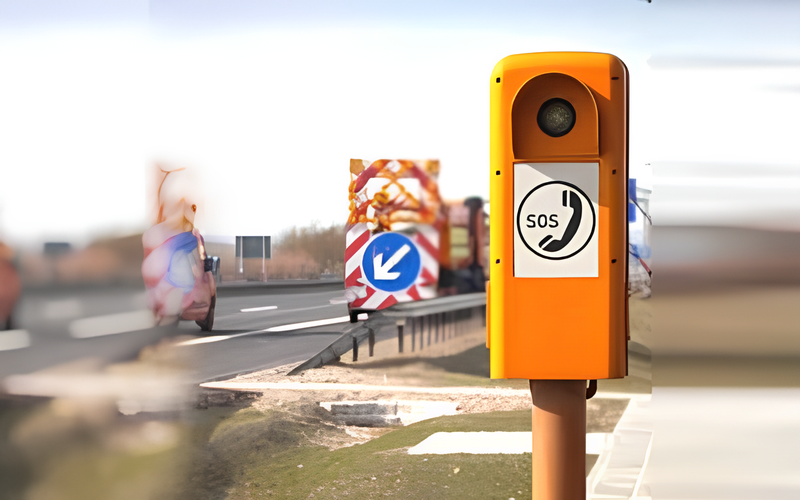
All about emergency call terminals An emergency call terminal is a telephone station that allows for quick contact with emergency services in case of an emergency. This device is generally visible along highways and expressways, but also on beaches for some time now. When should you use an emergency call terminal? What are the characteristics of this device? What is an emergency call terminal? If you are used to driving on highways, you must have noticed small orange telephone booths along the roads. These are none other than emergency call terminals, also known as SOS terminals or emergency posts. As their name suggests, these devices allow for emergency calls. In France, emergency call terminals are found every two kilometers along emergency lanes. Emergency call terminals are recognizable by their orange, yellow, or red color. The inscription “emergencies” or “SOS” may also be visible on the booth. One of the peculiarities of this device is that it is geolocated. No matter where you make the call from the terminal, your interlocutor will be able to find your location. Another peculiarity is that the user does not have to dial a number to make an emergency call. They simply need to press a button and will be directly connected to an emergency call management center. The operator on the line will be responsible for contacting the services appropriate to the situation. This may include doctors, ambulances, firefighters, or breakdown services. The advantage of the emergency call terminal is that you can contact emergency services at any time, wherever you are. Whether you have misplaced your smartphone or its battery is dead, you will have no trouble getting assistance or rescue. Moreover, thanks to geolocation, you will not have to indicate your position. An emergency call terminal is powered by photovoltaic panels, and the connection is provided by the GSM network or fiber optics. Except in case of device failure or malfunction, you will be assured of immediate assistance. If no agent can receive your call, you have the option to leave a message. Your request will then be processed within a maximum of 25 minutes. Emergency call terminal: How and when to use it? Emergency call terminals are devices designed to help people in emergency situations. While we mostly see them on highways, they are also available in train stations, industrial buildings, and even on beaches. You can use an emergency call terminal in various situations: in case of vehicle breakdown; in case of a road accident (whether you are a victim or a witness); in case of a passenger feeling unwell; in case of an incident on the beach (drowning, sting, injury…); in case of distress (theft, attack, assault…). In short, whenever you need assistance from emergency services, you can use an emergency call terminal. Whether you have a phone or not, you can use the device. It is also more recommended to use the SOS terminal rather than a personal phone in an emergency situation because it is geolocated. It will be easier for emergency services to find the location of the event. Since the device is located every two kilometers, you will have no difficulty finding one on your way. ISIS Waterproof Emergency Phone In short, whenever you need assistance from emergency services, you can use an emergency call terminal. Whether you have a phone or not, you can use the device. It is also more recommended to use the SOS terminal rather than a personal phone in an emergency situation because it is geolocated. It will be easier for emergency services to find the location of the event. Since the device is located every two kilometers, you will have no difficulty finding one on your way. OneUP Totem Emergency Call Terminal To use an emergency call terminal, simply pick up the handset and press a button. On some devices, there is a speaker function, facilitating the call in cases where you are unable to hold the handset. Depending on the model, the device may include an indicator light that will show the call status. If it is off, you can press the call button. While waiting for the operator’s response, the indicator will flash. As soon as the light is steady, you can speak and report the emergency situation. For better assistance, you should provide as many details as possible about the event for which you are requesting assistance. Only hang up when the agent on the line asks you to. Have a project? Contact us! Share Articles Articles you might be interested in Protocole de communication industriel : guide des standards Protocole de communication industriel : analyse des standards utilisés en… Read More A2S Atex20 juillet 2026 Téléphone étanche : guide complet environnements dangereux Téléphone étanche : guide complet pour les environnements d’urgence Un… Read More A2S Atex14 juillet 2026 Analogique, IP ou GSM : Quelle technologie pour votre interphonie en environnement critique ? Analogique, IP ou GSM : Quelle technologie pour votre interphonie… Read More A2S Atex12 février 2026 Everything You Need to Know About Emergency Call Stations Everything You Need to Know About Emergency Call Stations Une… Read More A2S Atex9 janvier 2026 Load More Categories Travel Tips Travel Planning Destinations

